A kids’ bike has a short working life. A child sits on a 14 inch bike at three, a 16 inch at four or five, a 20 inch around six, a 24 inch by eight. So the real price of a good bike is not the sticker. It is the sticker multiplied by four sizes, minus whatever you get back.
We priced that path with one premium brand, woom, because it publishes prices for every size and runs its own used-bike marketplace, which gives us real asking prices for secondhand bikes. The question: for the same sequence of bikes, how much does buying used or sharing between siblings save, and when is paying for new worth it?
Four sizes, four purchases
Assumptions
- Wheel sizes and age ranges follow Academy Sports + Outdoors’ size chart: 14 inch for ages 3 to 5, 16 inch for 4 to 6, 20 inch for 5 to 8, 24 inch for 8 to 11. Real kids vary a lot, and inseam matters more than age.
- Prices are woom’s U.S. list prices for the closest pedal-bike model in each size, checked October 12, 2026. Woom is a premium brand. We did not price big-box bikes because we could not open a current price page for one, so use your own price in the same math.
- Used price is about 65% of the original price. That is the median of nine woom Exchange listings (range 47% to 80%). These are asking prices, not completed sales.
- Tax, shipping, helmets, training wheels and pedals are left out. Resale of the bikes you buy is left out.
| Wheel size | Typical age | Typical height | woom model, new price |
|---|---|---|---|
| 14 inch | 3–5 years | 37–44 in | GO 1 PLUS, $299 |
| 16 inch | 4–6 years | 41–48 in | GO 3, $499 |
| 20 inch | 5–8 years | 45–54 in | GO 4, $639 |
| 24 inch | 8–11 years | 49–59 in | EXPLORE 5, $819 |
| All four sizes, bought new | $2,256 |
$2,256
What one child’s run of four woom pedal bikes costs new, from the 14 inch to the 24 inch.
Source: ParentWorth calculation from woom.com U.S. prices, checked October 12, 2026.
What used and hand-me-downs save
Woom Exchange lists used woom bikes next to their original retail prices. Nine listings on the front page ranged from 47% of the original price (a 12 inch bike asked $116 against $249) to 80% (a 26 inch bike asked $423 against $529). The middle was about 65%.
| Path (one set of four sizes) | Total | Per child |
|---|---|---|
| New, one child | $2,256 | $2,256 |
| New, passed to a sibling | $2,256 | $1,128 |
| Used at about 65%, one child | $1,466 | $1,466 |
| Used at about 65%, passed to a sibling | $1,466 | $733 |
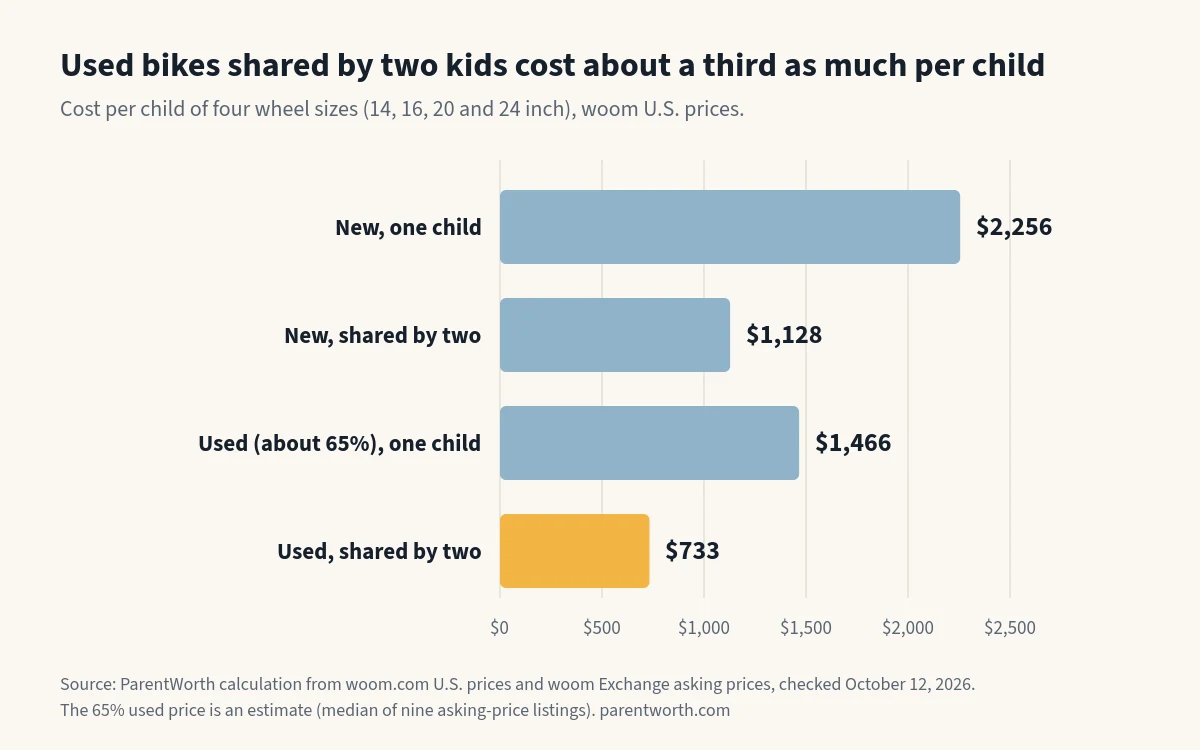
Buying used saves about $790 over the four sizes, roughly a third. Sharing between two children saves about half per child, whether the bikes were new or used. Doing both gets the per-child cost to about a third of the all-new, one-child path.
Why a bike you outgrow is a good one to buy used
On Academy’s chart each wheel size spans two to three years of age, so a bike one child has outgrown can still have plenty of use left. Woom says a used bike is always cheaper to start with, and that its warranty usually does not apply when you buy from a private seller. Its checklist for a used bike is simple: look for cracks, especially at the welds; check the rims for rust and grind marks; ask about brake pad wear; make sure the gears engage cleanly; and listen for noise from the cranks and hubs on a test ride.
Watch out
Asking prices on a resale marketplace are not what bikes sell for, and they depend on the model, the generation and the condition. The 47% to 80% range is wide. Treat our 65% as a planning number, and compare it with the local listings you actually find.
Fit is the other thing that decides whether a bike is a good buy. Academy says a child’s inseam is the most important number, and that a child on the edge of two wheel sizes can take the bigger one as long as they can at least touch their toes to the ground. A bike that is too big is a bike the child cannot use yet, and you have already paid for it.
The same buy, rent or borrow question comes up with a beginner’s musical instrument and with toys. A bike has one advantage over both: a sturdy one can pass to a younger sibling.
Who should buy new, and who should not
One child, tight budget
You have one child and no sibling to pass bikes to.
Buy used: about $1,466 instead of $2,256
Two kids close in age
The older child’s bikes go to the younger one, two or three years later.
New can pay off: $1,128 per child
A kid who hates riding
You do not know yet whether your child will ride.
Start used or borrow, and pay for new only after the habit forms
The one item to buy new for the head
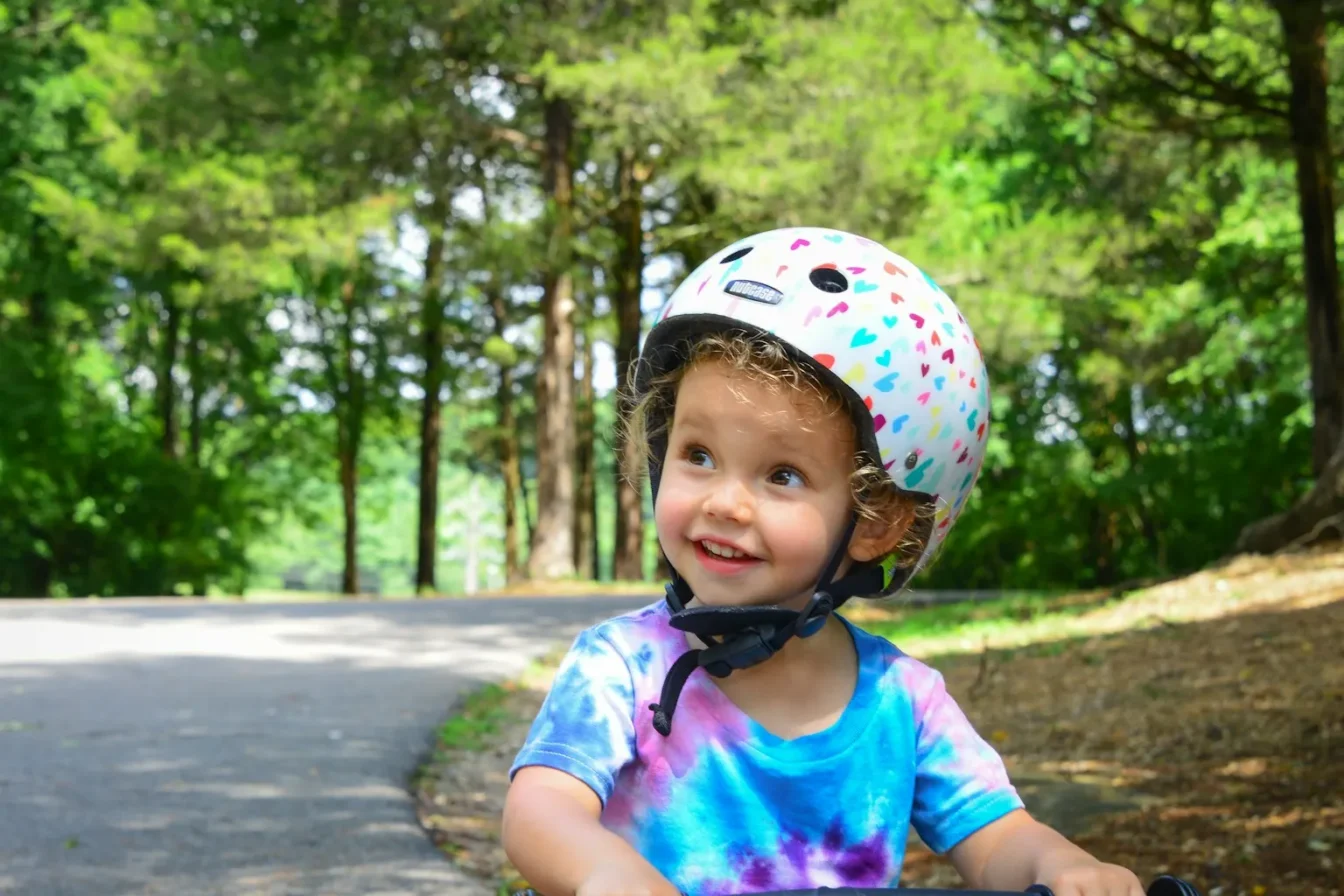
Whatever bike you choose, the helmet is a separate purchase, and it has its own federal rule. The U.S. Consumer Product Safety Commission (CPSC) says bicycle helmets must meet 16 CFR part 1203, and each helmet must carry a label certifying that it does. Sizing is by head measurement, not age. This is not a place to guess, so measure first and check the label.
Helmet pick: Bell Sidetrack II MIPS Youth Bike Helmet
Good for: a school-age child whose head measures 50 to 57 cm, in the Universal Youth size. The listing describes a polycarbonate shell, MIPS technology and an adjustable fit dial, and says to always take a head measurement first. Bell also sells a 47 to 54 cm Universal Child size, so choose by head size.
Is it worth it?
Verdict: it depends
A premium new bike is not worth it for a single child, because the child will outgrow four sizes in about eight years. Buying used at about 65% of the original price (our estimate) saves roughly $790 over the same run. New starts to make sense when two or more children will ride the same bikes, and when you plan to hand them down in good condition. Whichever route you take, buy the helmet for the head measurement, not the age.
Decision rules
- If you have one child and the next size is a year away, look for a used bike first. At about 65% of the new price, the four-size path costs roughly $1,466 instead of $2,256.
- If a younger sibling will ride the same bike within two or three years, buy new and plan to hand it down. Per child, the cost halves.
- If your child is between two wheel sizes, take the larger one only if their toes can touch the ground.
- If you buy used from a private seller, run the checklist: welds, rims, brakes, gears and a test ride. Do not expect a warranty.
- If you are unsure your child will ride, borrow or buy the cheapest suitable bike and upgrade after the habit forms.
Frequently asked questions
How often does a child need a new bike?
About every one to three years, as wheel size changes. Academy’s chart has 14 inch bikes for ages 3 to 5, 16 inch for 4 to 6, 20 inch for 5 to 8 and 24 inch for 8 to 11, with large overlaps. Inseam is a better guide than age.
How do I size a kids’ bike?
Measure the child’s inseam with shoes on, using a book against the groin. Pick the wheel size from a chart, then check the bike’s standover height and seat range. Academy says the inseam should at least match the standover height, and a child who is between sizes can take the bigger bike if their toes touch the ground.
Is a lighter, more expensive bike worth it?
This article compares new with used and shared, not light with heavy. Woom lists the 14 inch GO 2 at 12.2 lb and the 24 inch EXPLORE 5 at 20.8 lb. We did not find a test that links bike weight to how much a child rides, so we did not put a price on it.
Do used bikes come with a warranty?
Usually not from a private seller, according to woom. Brand-run resale programs may differ, so read the terms. A mechanic can check a used bike before you buy.
Can I use a used helmet?
We did not price used helmets. CPSC requires a certification label on new bicycle helmets, and the guidance we found does not address secondhand ones, so check the label and the manufacturer’s advice before using any helmet that is not new.
Sources
- woom. Shop All woom Bikes (U.S. price list). Checked October 12, 2026.
- woom Exchange. Buy & Sell Used woom Kids’ Bikes (front-page listings, asking prices vs original retail). Checked October 12, 2026.
- Academy Sports + Outdoors. Kids Bike Size Chart: How to Measure & Choose Yours. Accessed October 12, 2026.
- woom. Buying a children’s bike: new or used? Accessed October 2026.
- U.S. Consumer Product Safety Commission. Bicycle Helmets business guidance. Accessed October 2026.
- Amazon.com. Bell Sidetrack II MIPS Youth Bike Helmet, Universal Youth 50–57 cm (product listing, ASIN B08KSH4PP6). Accessed October 12, 2026.