
Is a $1,000 stroller a smart investment or just marketing? We break down the real numbers, resale value, and cost-per-walk to help you decide.
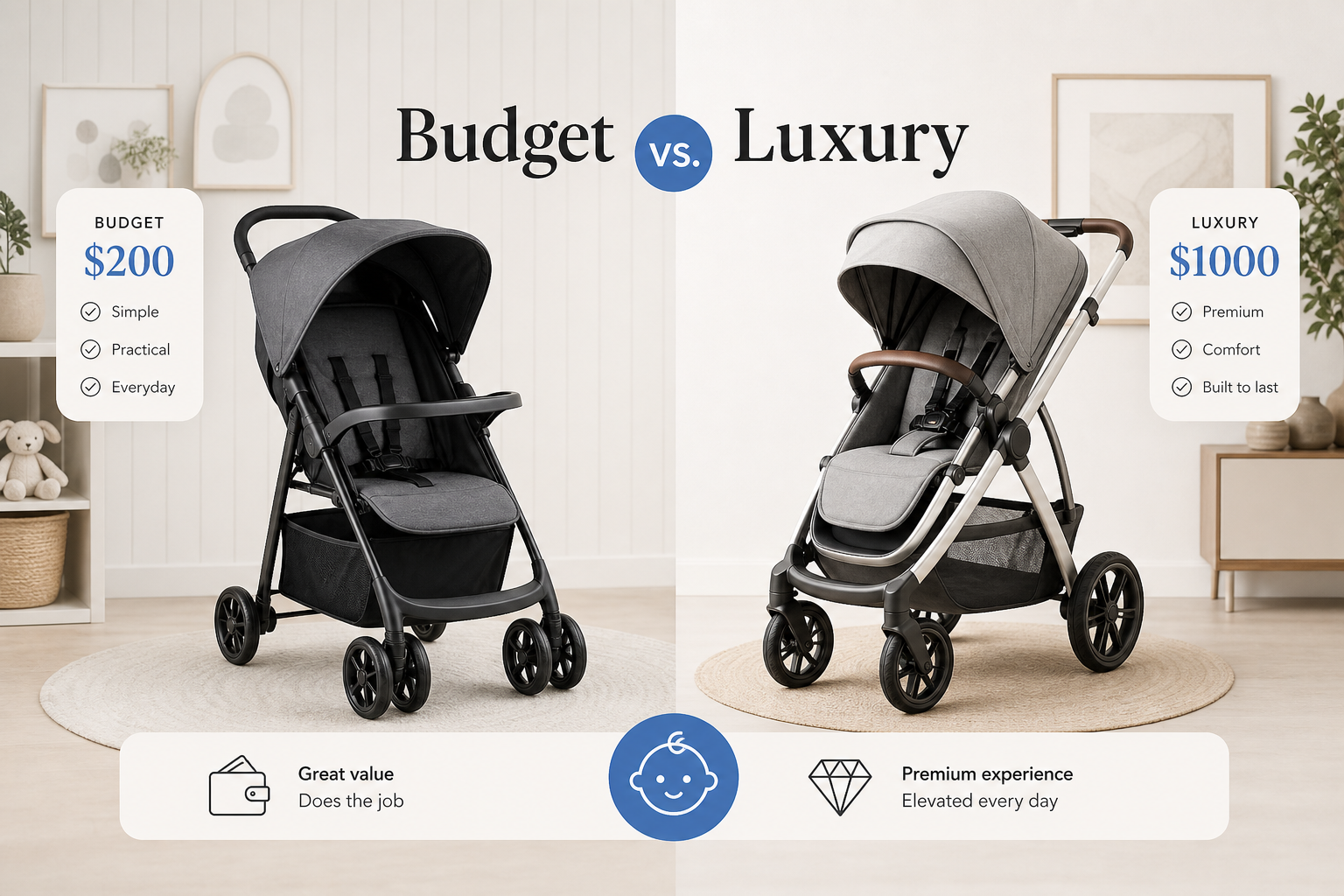
The first time you walk into a baby store, you experience a specific kind of sticker shock. You see a stroller that looks perfectly fine for $250, and then you see another one that looks remarkably similar for $1,200.
Your brain immediately goes to one of two places: “It’s a scam for status-seeking parents” or “The cheap one must be dangerous.”
Neither is entirely true. When you strip away the branding and the “aesthetic” of the fabric, the decision between a budget and a luxury stroller is actually a math problem involving durability, resale value, and terrain.
The decision: Budget vs. luxury
We are comparing two distinct paths:
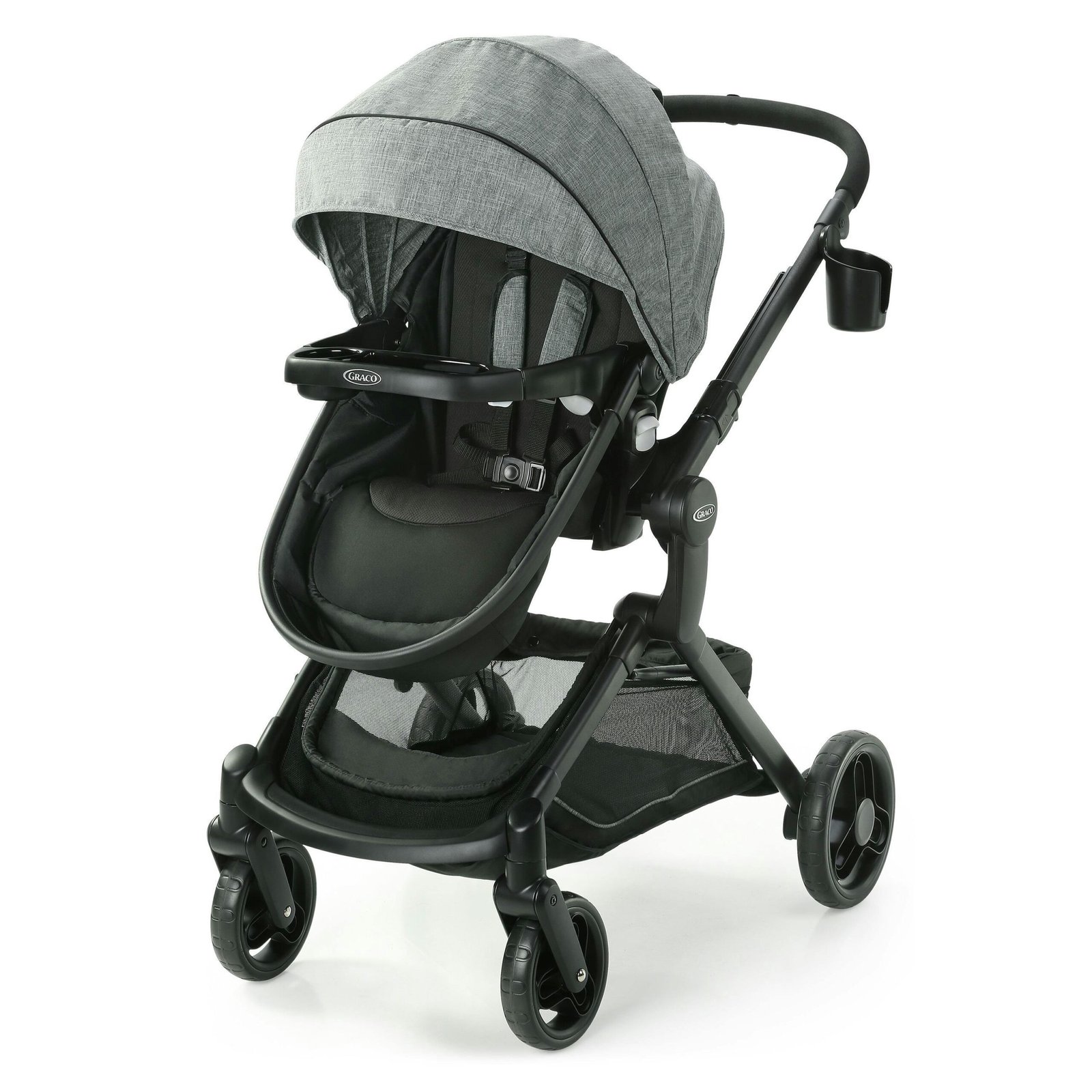
- The Budget Path: High-value, mass-market strollers (e.g., Graco Modes Nest) usually priced between $250 and $400.
- The Luxury Path: Premium, high-performance systems (e.g., UPPAbaby Vista V3) priced between $900 and $1,300.
Our goal is to determine which path provides the best return on your investment over a 3-year period.
Assumptions
To make this comparison fair, we’ll use the following numbers based on typical usage for a working professional family in the US, UK, or AU:
- Usage Frequency: 5 walks per week (260 walks per year).
- Total Duration: 3 years (780 total walks).
- Children: Analysis assumes use for one child, with a note on the transition to two.
Key factors in the decision
What are you actually paying for when you cross the $1,000 threshold?
- The Suspension and Wheels: Budget strollers often use hard plastic or foam-filled wheels with minimal suspension. Luxury models use high-grade polyurethane wheels and advanced all-wheel suspension.
- The Resale Floor: Luxury gear has a “floor” price. A $1,000 UPPAbaby Vista V2 can often be sold used for $500+ after 3 years. A $300 Graco often sells for $50 or is given away for free.
- The “Double” Potential: Luxury models often include the ability to add a second seat later. Budget models are usually “one and done,” meaning if you have a second child, you have to buy an entirely new double stroller.
Scenario comparison: Graco vs. UPPAbaby
| Feature | Graco Modes™ Nest ($380 MSRP) | UPPAbaby Vista® V2 ($900+ MSRP) |
|---|---|---|
| Handling | Good on flat pavement; struggles on grass/gravel. | Exceptional; “one-handed” push on almost any terrain. |
| Weight | ~22 lbs (Lightweight) | ~27 lbs (Heavy/Bulky) |
| Included | Stroller + Infant Car Seat (Travel System) | Stroller + Bassinet (Travel System) |
| Durability | Hard plastic components; prone to squeaking. | Aluminum/Magnesium frame; built like a tank. |
| Resale | ~20% of original value. | ~55% of original value. |
The “cost-per-walk” breakdown
If we look at the total cost of ownership (TCO) after 3 years, the gap between these two options narrows significantly.
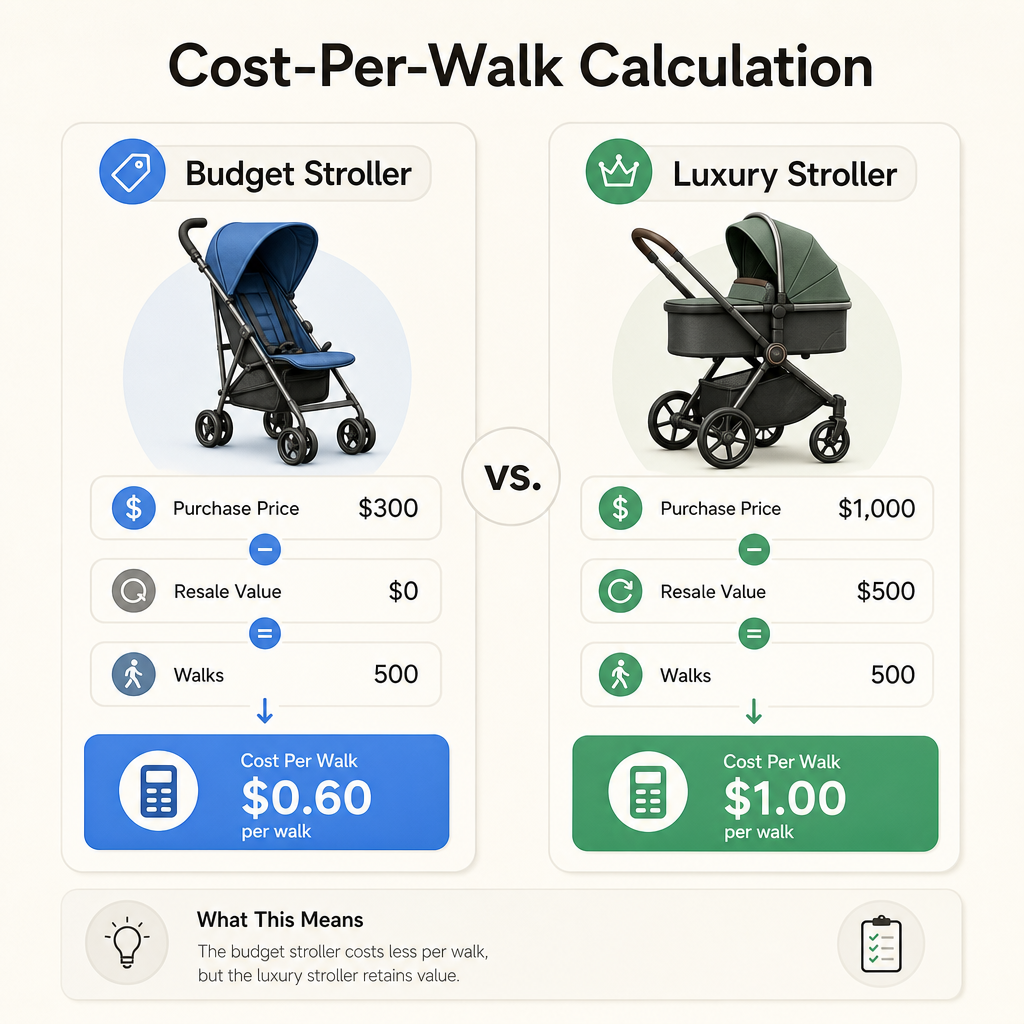
Budget Path:
- Initial Purchase: $350
- Resale Value (3 yrs): $50
- Net Cost: $300
- Cost Per Walk: $0.38
Luxury Path:
- Initial Purchase: $1,000
- Resale Value (3 yrs): $550
- Net Cost: $450
- Cost Per Walk: $0.57
For an extra $0.19 per walk, you get a stroller that is easier to push, more durable, and potentially ready for a second child.
The mid-range alternative: Mockingbird
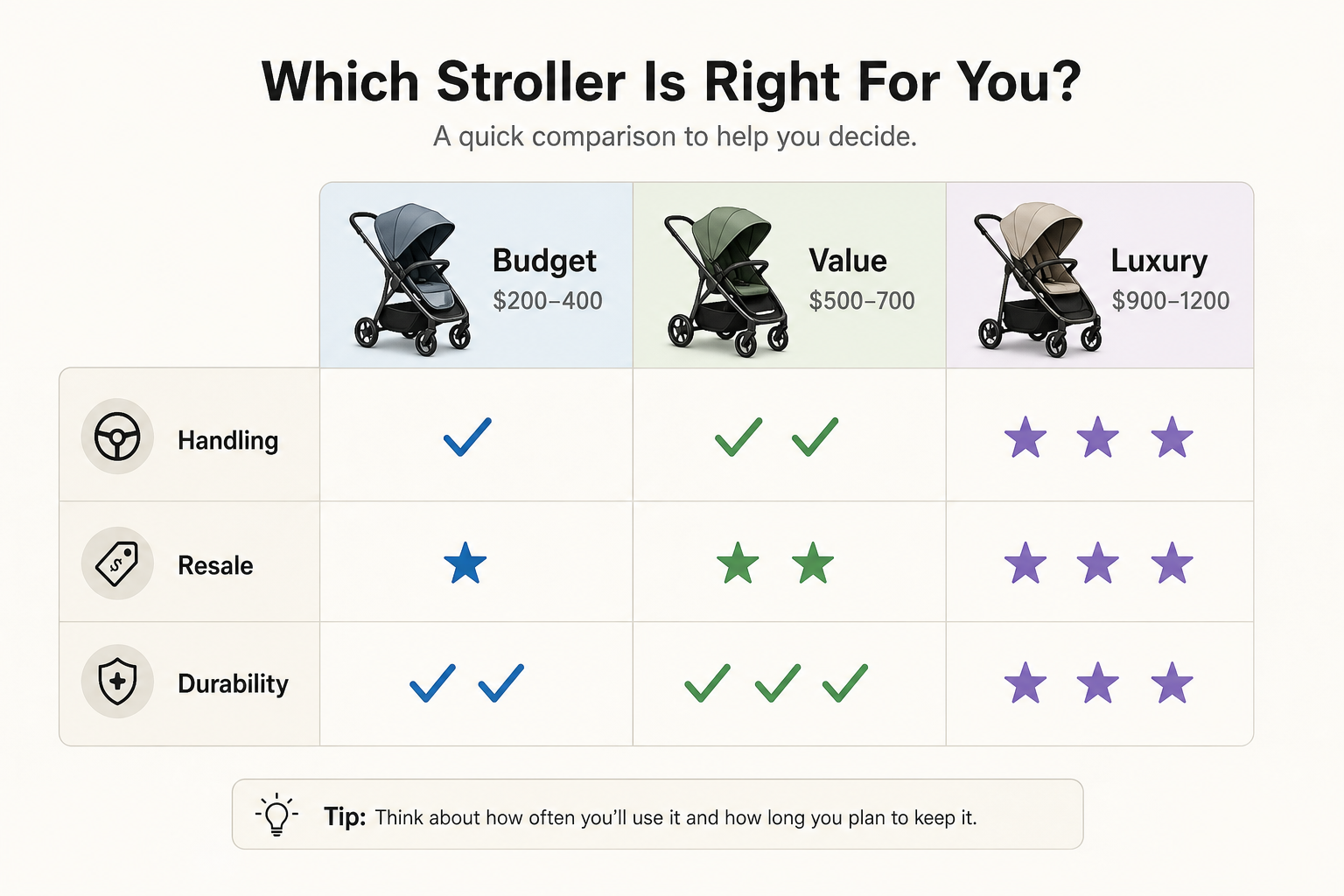
If $1,000 feels too steep, but you want the luxury features, the Mockingbird Single-to-Double ($550) has become the logical “middle ground.” It offers the same sleek look and modularity of the Vista at roughly half the price.
Community consensus notes that while Mockingbird is 90% of the UPPAbaby experience, it is heavier (36 lbs in double mode) and the frame has slightly more flex on uneven ground.
Is it worth it?
The luxury stroller is worth it if and only if you meet one of three criteria:
- You live in a walkable city where the stroller is your primary “car.”
- You plan to have multiple children close together.
- You value your time and physical ease (pushing a 30lb toddler in a $200 stroller on a hill is a legitimate workout).
If you primarily use your stroller for quick trips into a flat mall or the doctor’s office, the $200 model is the more logical financial choice.
Decision rules: The IF/THEN logic
- IF you live in a suburb and only use your stroller on flat sidewalks or in shops, THEN buy the Budget model and invest the $700 difference.
- IF you plan to have a second child within 2 years, THEN buy the Luxury model (or a Mockingbird) to avoid buying two strollers.
- IF you are buying used, THEN always choose the Luxury brand. A used $400 UPPAbaby is often a better mechanical experience than a brand-new $350 Graco.
- IF you drive a small car with limited trunk space, THEN skip the luxury models; they are notoriously bulky and heavy to lift.
Common Mistakes
- Buying for the “Bassinet”: Many parents pay extra for a bassinet they only use for 3 months. Look for strollers where the toddler seat reclines flat or converts into a “pramette.”
- Ignoring the Fold: Some luxury strollers require two hands and a wrestling match to fold. If you are doing this in a parking lot with a crying baby, you will regret your $1,000 purchase.
- Overestimating “Off-Roading”: Unless you are literally running on trails, you don’t need a $600 “jogging” stroller. Most luxury full-size strollers handle standard grass and gravel just fine.
Conclusion
If you are a city dweller or plan on having multiple kids, the luxury stroller is the logical choice. The higher resale value and better handling act as “insurance” against the daily frustration of a subpar push.
However, if you are a suburban parent who mostly drives, the luxury stroller is a luxury, not a necessity. You are better off spending $350 on a solid budget model and putting that $650 difference into your child’s college fund.
Try ParentWorth analysis
If you’re still undecided, a simple tool can help you compare the long-term TCO of your specific gear shortlist based on your local used market prices.
Frequently Asked Questions
Does a luxury stroller have better resale value?
Yes. Luxury brands like UPPAbaby often retain 50-70% of their value, whereas budget strollers typically resell for 20-30% of their original price.
Is a $1,000 stroller safer than a $300 one?
Not necessarily. All strollers sold in the US, UK, and AU must meet the same baseline safety standards. Luxury strollers often offer more ‘convenience’ safety features, like easier brakes or better suspension, rather than higher impact safety.
Which stroller is best for city living?
For cities with uneven pavement, a luxury model with high-end suspension is usually worth the investment. For flat malls or suburban car trips, a lighter budget model often suffices.
How long does a typical stroller last?
A high-end stroller is built to last through 2-3 children (6-9 years), while many budget models are designed for 2-3 years of heavy use before showing significant mechanical wear.
Can I get a luxury feel for a budget price?
Direct-to-consumer brands like Mockingbird offer a mid-range price (~$550) with many features found in $1,000 models, bridging the gap between budget and luxury.